
The deal size could be in excess of Rs 2,000 crore, though this could not be verified. Sivasankaran had invested close to Rs 1,800 crore in 2007 to take a 41 per cent stake in Aamby Valley. The Sahara Group is the majority investor, with a 51 per cent stake.

In this emerging trend, doctors are joining hands with venture capitalists, drug firms and medical equipment vendors to set up advanced medical care facilities at low costs.

This metro line would be a 33.65-km rail link between Bangalore City Centre and Bangalore International Airport.

It has 150 research and development locations in over 30 countries around the world, employing over 32,300 people.

the early 1980s, multinationals set up R&D units in India to make use of the low costs and huge talent pool.

In this emerging trend, doctors are joining hands with venture capitalists, drug firms and medical equipment vendors to set up advanced medical care facilities at low costs.

Indian pharmaceutical companies, which are increasingly choosing to settle patent litigation with global drug majors in the US, would have to be more cautious now.

Anil Dhirubhai Ambani Group company Reliance Infrastructure (R-Infra) will soon be the official owner of the second phase of the Mumbai Metro project. The state government and the company will sign a concession agreement for the Rs 11,000-crore (Rs 110 billion) project on Thursday, according to sources.

The court's stand is expected to help Wockhardt conclude the deal within a month's time.
The BCG analysis shows Lupin gave an annualised average TSR of 29.9 per cent, ahead of the 18.4 per cent of Israel-based Teva Pharmaceutical, the world's largest generics maker. Teva is next on the list. Another Indian generic maker, Glenmark, occupies third position, with an 18 per cent TSR to its investors.

Orders are flowing for the water and wastewater treatment industry, as leading players in the domestic market such as VA Tech Wabag, Larsen and Toubro, Thermax and IVRCL Infra have bagged over Rs 2,500 crore (Rs 25 billion) worth of orders in the past two-to-three months.

Novartis markets Nilotinib globally as Tasigna, which is used as the second-line therapy for Gleevec-resistant patients in the case of chronic myelogenous leukemia.

However, analysts say it is not immediately clear if the merger would have any impact on Novartis India, the listed Indian subsidiary of the company.

This increase is despite the decreased growth of drug sales in the US - the world's largest market - which has seen a tightening of regulations and aggressive competition.
Leading Indian drug majors, such as Ranbaxy Laboratories, Dr Reddy's Laboratories, Piramal Healthcare and Wockhardt, are in-licensing popular products from overseas drug makers to boost their domestic sales.
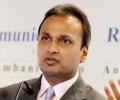
R-Infra quoted Rs 42-crore (Rs 420-million) premium over the bids of rival companies such as GVK Power and Infrastructure Limited, GMR Infrastructure, B Sennaih and C&C, JMC Srei and Sadhbhav, sources told Business Standard.
Move comes within months of acquiring Wockhardt hospitals. Fortis Healthcare, a hospital chain promoted by former Ranbaxy owners Malvinder Mohan Singh and Shivinder Mohan Singh, is close to a major acquisition overseas

India has become the most sought destination for investment by Japanese companies, next to China, and ahead of other Asian countries and emerging economies like Russia, Brazil, Mexico and even the United States and the United Kingdom.

Mumbai's Metro rail system, which is scheduled to take off by next year, will have a Geographic Information System for mapping the entire rail tracks and nearby areas to enhance safety, maintenance and traffic regulation.

The central government is planning to mandate biometric identification for clinical trial volunteers in the country to bring in global standards and to weed out unethical practices in the industry, which is less than a decade old.
 © 2025 Rediff.com - Investor Information - Advertise with us - Disclaimer - Privacy Policy - Sitemap - Feedback - About us - Terms of use - Grievances